 how-to
Dinosaur Mindfulness Activities for Kids: 6 Calming Games
Table of Contents
- Why Dinosaur Mindfulness Activities Work for Young Children
- Dinosaur Breathing Exercises for Kids
- Guided Meditation for Kids Using Dinosaur Stories
- Dinosaur Yoga Poses for Kids: Slow Movement and Calm
- Short Breathing Exercises for Children with Dinosaur Themes
- Dinosaur Colouring and Mindful Drawing Activities
- Getting Started: What You'll Need and How to Use These Activities
- Common Mistakes Parents Make with Mindfulness Activities
- Frequently Asked Questions
Last Updated: 12 October 2026
Why Dinosaur Mindfulness Activities Work for Young Children
Dinosaur mindfulness activities combine two things children love: dinosaurs and calm-down time. At Roarora, we've created mindfulness activities that use dinosaur characters to help young children focus, breathe slowly, and manage big feelings. The reason these work so well is simple, dinosaurs capture kids' imagination, which makes them willing to sit still and try something new.
Young children respond better to mindfulness when it's wrapped in a story or character they care about. A plain breathing exercise might feel boring. But a "T-Rex breathing" exercise? That feels like an adventure. This approach helps children aged 3-8 develop emotional awareness without feeling like they're doing something difficult or strange.
Research shows that mindfulness helps children manage anxiety and improve focus. When you pair that with dinosaur themes, children stay engaged long enough to actually benefit from the practice.
Dinosaur Breathing Exercises for Kids
Dinosaur breathing exercises teach children how to slow their breathing when they feel upset, excited, or anxious. The best part is they take just 2-3 minutes and need no equipment.
T-Rex Breathing works well for children aged 4 and up. Ask your child to stand tall like a T-Rex with arms bent at the elbows. Have them breathe in slowly through their nose for a count of four, hold for two counts, then breathe out through their mouth for a count of four. Repeat five to eight times.
Stegosaurus Spine Breathing suits children aged 3-7. Your child sits cross-legged and places one hand on their chest. As they breathe in, they slowly raise their other arm up and out like a spike rising along a Stegosaurus's back. As they breathe out, the arm comes back down. Do this ten times. This combines movement with breathing, which helps younger children stay focused.
Gentle Pteranodon Wings works for ages 5 and up. Your child stands with arms at their sides. They breathe in and slowly lift both arms out to the sides like wings spreading. They breathe out and lower the arms back down. Repeat eight to ten times. This exercise calms the nervous system and teaches children to notice the connection between their breath and their body.
Start with just two minutes of breathing exercises. Most children will naturally want to do more once they understand the pattern.
Guided Meditation for Kids Using Dinosaur Stories
Guided meditation using dinosaur stories helps children relax and develop focus. These work best for children aged 4-8, though younger children may enjoy shorter versions.
A simple dinosaur meditation starts with your child sitting or lying down in a comfortable position. Use a calm, slow voice and guide them through a story. Here's a basic example:
"Close your eyes and imagine you're walking through a peaceful dinosaur forest. The ground is soft beneath your feet. You see a friendly Brachiosaurus eating leaves from the tallest trees. The air is warm and safe. You hear gentle sounds, leaves rustling, birds singing. You feel completely calm and happy here. When you're ready, slowly open your eyes."
Keep guided meditations between three and five minutes for younger children. Longer meditations work for children aged 7-8. The key is using a slow pace and repeating calming words like "safe," "peaceful," and "calm."
You can create your own dinosaur stories or use dinosaur mindfulness resources. The story doesn't need to be complex, simple, peaceful scenarios work best.
Dinosaur Yoga Poses for Kids: Slow Movement and Calm
Dinosaur yoga poses combine gentle movement with mindfulness. These poses help children build body awareness and release tension. Most work for children aged 3-8.
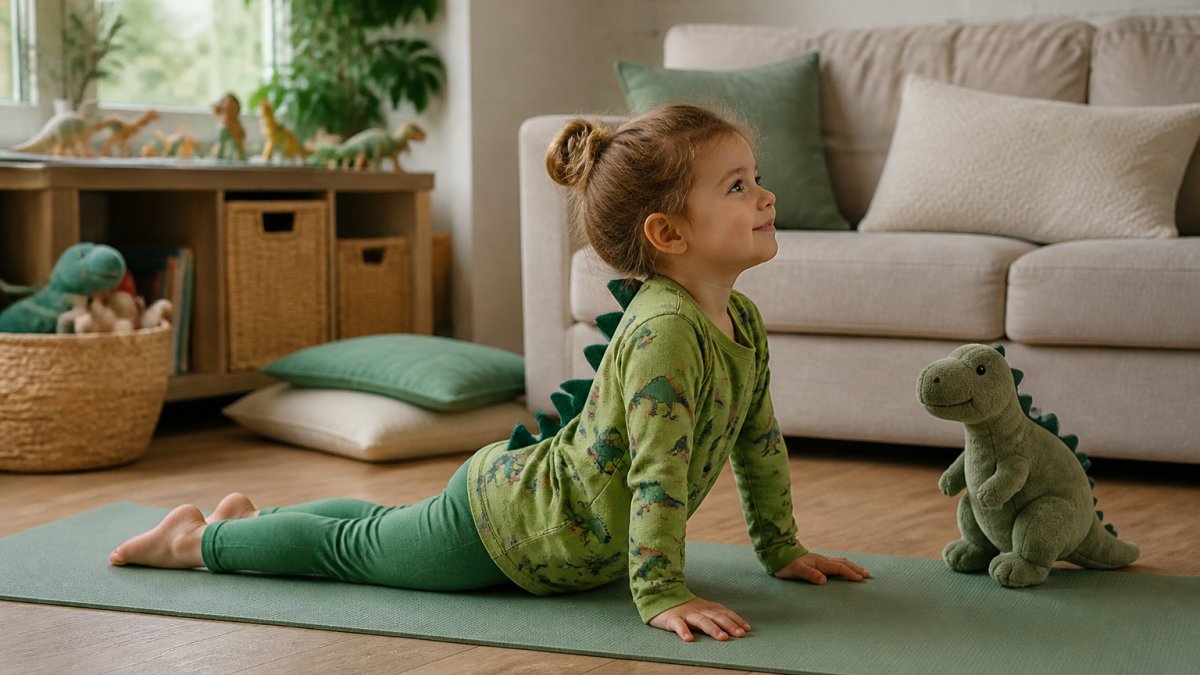
Dinosaur Stretch teaches children to move slowly and notice their body. Your child stands with feet wide apart, then slowly bends forward like a dinosaur lowering its long neck to the ground. They hold this for five to ten seconds, breathing slowly. This stretches the hamstrings and back while teaching mindfulness.
Tall Dinosaur Pose works like a standing meditation. Your child stands tall with feet together, arms at their sides or raised overhead. They take five slow breaths while imagining they're a tall dinosaur standing in the sun. This builds confidence and body awareness.
Resting Dinosaur Pose is perfect for ending a mindfulness session. Your child lies on their back with knees bent and feet flat on the floor, or curls up on their side in a comfortable position. They breathe slowly and imagine they're a dinosaur resting after a long day.
Hold each pose for just 30 seconds to one minute with younger children. Older children can hold poses for longer. The goal is slow, gentle movement paired with calm breathing.
Short Breathing Exercises for Children with Dinosaur Themes
Short breathing exercises fit easily into a busy day. These dinosaur breathing exercises take one to three minutes and help children reset when they feel frustrated, excited, or overwhelmed.
Volcano Breathing works for ages 4 and up. Your child sits comfortably and takes a slow breath in through their nose. Then they breathe out quickly through their mouth, like a volcano erupting. Do this five times, then rest. This releases tension quickly.
Sleeping Dinosaur Breath suits younger children aged 3-6. Your child lies down and breathes in slowly through their nose while counting to four. They hold the breath for two counts, then breathe out slowly while counting to four. This is the same rhythm as T-Rex breathing but lying down feels more restful.
Quick Dinosaur Calm takes just 60 seconds. Your child takes three deep breaths in through the nose and out through the mouth. Between each breath, they pause and notice how their body feels. This works well before school, after an upsetting moment, or anytime they need to reset.
The beauty of short breathing exercises is that children can use them anywhere, at home, in the car, or even at school with a teacher's permission.
Dinosaur Colouring and Mindful Drawing Activities
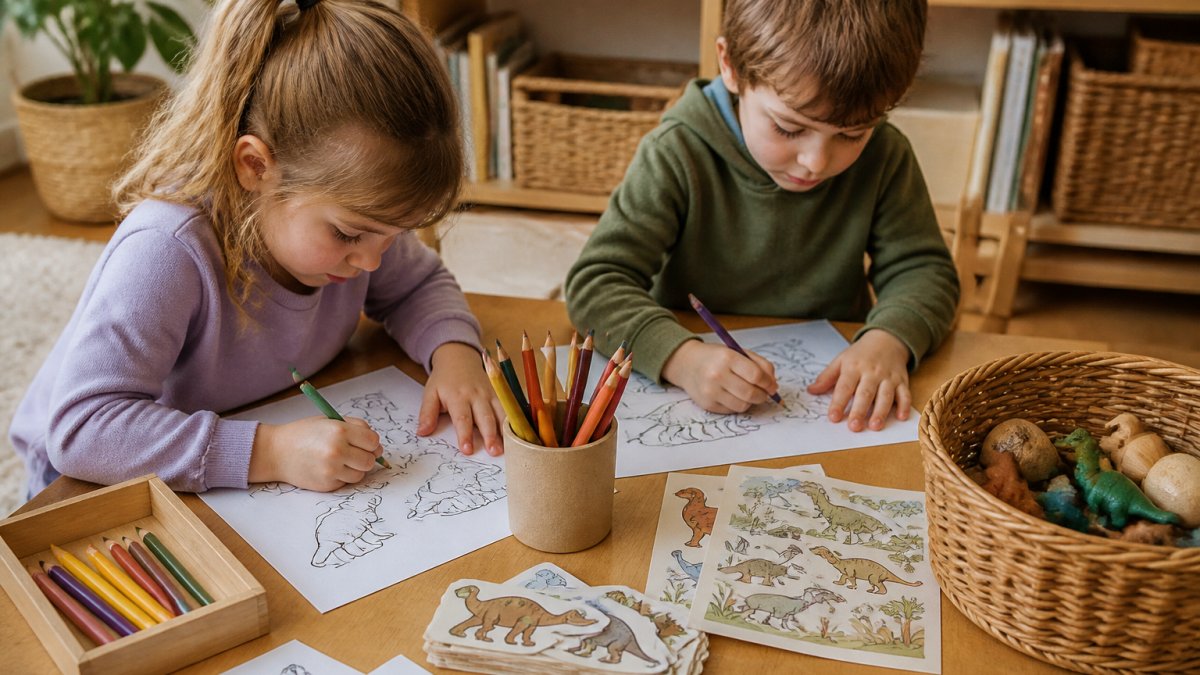
Colouring and drawing with dinosaur themes naturally build mindfulness. When children focus on colours and details, their minds slow down and anxiety decreases.
Mindful colouring works best when you encourage slow, intentional colour choices. Instead of rushing through a page, ask your child to pick one colour and colour slowly, noticing how the crayon feels in their hand and how the colour fills the space. This turns colouring into a calm, focused activity rather than a race to finish.
Dinosaur colouring packs from Roarora feature detailed designs that hold children's attention. The characters, Rory, Tilly, Stella, Benny, Ada, and Vee, give children a story to connect with while they colour. This combination of familiar characters and focused activity creates a natural mindfulness practice.
Drawing dinosaurs works too. Your child doesn't need to draw perfectly. The goal is slow, focused movement. They might draw simple dinosaur shapes, circles for heads, long lines for necks and tails. As they draw, encourage them to breathe slowly and notice the colours and shapes they're creating.
Set aside 10-15 minutes for colouring or drawing. Quiet background music or nature sounds can enhance the calm atmosphere.
Getting Started: What You'll Need and How to Use These Activities
You don't need much to start dinosaur mindfulness activities. Most require just a comfortable space and your time.
What you'll need:
- A quiet space where your child can sit or lie down comfortably
- A soft mat or cushion (optional but helpful)
- Dinosaur colouring packs or paper and colouring supplies
- Your calm, patient voice
How to introduce these activities:
Start with just one activity. If your child loves dinosaurs, begin with a simple dinosaur breathing exercise. Show them how to do it together, then practise it daily for a week. Once they're comfortable, add a second activity.
Keep sessions short. Five to ten minutes works well for children aged 3-5. Children aged 6-8 can handle 10-15 minutes. Longer isn't better, consistency matters more than length.
Make it part of a routine. Many parents use dinosaur mindfulness activities after school, before bed, or when their child feels upset. Routine helps children know what to expect and makes the practice feel natural.
Roarora's dinosaur mindfulness activities include printable guides that walk you through each exercise step-by-step. These digital downloads give you everything you need to get started immediately.
Activity | Best Age | Time Needed | How Often |
|---|---|---|---|
T-Rex Breathing | 4-8 | 2-3 minutes | Daily |
Stegosaurus Spine Breathing | 3-7 | 2-3 minutes | 3-4 times weekly |
Guided Dinosaur Meditation | 4-8 | 3-5 minutes | 2-3 times weekly |
Dinosaur Yoga Poses | 3-8 | 5-10 minutes | 3-4 times weekly |
Volcano Breathing | 4-8 | 1-2 minutes | As needed |
Dinosaur Colouring | 3-8 | 10-15 minutes | Daily or weekly |
Common Mistakes Parents Make with Mindfulness Activities
Parents often make small mistakes that reduce how well mindfulness activities work. Knowing these helps you get better results.
Mistake 1: Expecting too much too soon. Some parents think one breathing exercise will instantly calm an upset child. Mindfulness is a skill that builds over weeks, not days.
Mistake 2: Making it feel like a chore. If you force a child to do mindfulness activities, they'll resist. Let your child choose which dinosaur activity they want to try.
Mistake 3: Using a rushed or tense voice. Your calm matters. If you sound stressed or hurried while guiding a meditation or breathing exercise, your child picks up on that tension.
Mistake 4: Skipping the dinosaur element. The dinosaur theme isn't just decoration, it's what makes these activities work for children.
Mistake 5: Stopping too soon. Many parents try mindfulness for a week, see no dramatic change, and give up. Give these activities at least three to four weeks.
Mistake 6: Doing activities only when upset. Mindfulness works best as a regular practice, not just a crisis tool. Daily or several-times-weekly practice builds skills children can use when they actually need them.
Dinosaur mindfulness activities give children a tool for managing big feelings and building focus. They're simple, require no special equipment, and work because they connect mindfulness to something children already love.
Start with one activity this week. Choose one that matches your child's age and interests.
Frequently Asked Questions
How long should a dinosaur mindfulness activity last for a 5-year-old?
Most children aged 5-7 benefit from activities lasting 5-10 minutes. Younger children (3-4) may manage 2-3 minutes before losing focus. Start short and extend gradually as your child becomes comfortable. Consistency matters more than length—a 5-minute daily activity is far more effective than a 20-minute weekly session. Watch for signs of restlessness and wrap up before frustration sets in.
Can dinosaur breathing exercises really help my child manage anxious feelings?
Yes. Controlled breathing activates the parasympathetic nervous system, which naturally calms the body's stress response. When children practise dinosaur breathing exercises regularly, they develop a tool they can use independently when they feel worried or upset. Research shows mindfulness and breathing work best when practised daily, even for just a few minutes. The dinosaur theme makes the practise engaging rather than clinical, so children are more likely to keep doing it.
What makes these dinosaur mindfulness activities different from free colouring pages I can find online?
Structured mindfulness activities combine calming techniques with purposeful engagement—they're designed with specific breathing patterns, guided prompts, or movement sequences built in. Free colouring pages are creative but lack the mindfulness scaffolding. Roarora's dinosaur activities weave storytelling, guided instructions, and calm-down techniques together, so children aren't just colouring; they're actively learning to self-regulate. The dinosaur characters (Rory, Tilly, Stella, Benny, Ada and Vee) create continuity and emotional connection across activities.
Will these activities work for both my 3-year-old and my 8-year-old?
Activities can be adapted for different ages. Younger children (3-4) benefit from shorter, more movement-based activities like dinosaur yoga and simple breathing games. Older children (6-8) engage better with longer guided meditations, detailed colouring activities, and more complex breathing patterns. Start with activities recommended for your child's age, then adjust the duration and complexity based on their interest and focus. Many families find doing activities together works well—older siblings often enjoy helping younger ones, which builds patience and reinforces the skills.