 listicle
Mindfulness Activities for Anxious 6-Year-Olds
Table of Contents
- Why Mindfulness Matters for Anxious 6-Year-Olds
- Breathing Exercises for Children: Building a Calm Foundation
- Grounding Exercises for Children: Anchor Them in the Present
- Calming Exercises for Kids You Can Do Anywhere
- Bedtime Relaxation for Kids: Wind Down Before Sleep
- Making Mindfulness Stick: Tips for Success
- Conclusion
- Frequently Asked Questions
Last Updated: October 19, 2026
Why Mindfulness Matters for Anxious 6-Year-Olds
Anxiety in young children is more common than many parents realise. A six-year-old experiencing worry, restlessness, or difficulty concentrating may benefit from simple, structured techniques to calm their nervous system. Mindfulness activities for anxious 6 year olds offer a practical way to help children develop emotional awareness and self-regulation skills without requiring special equipment or lengthy training.
Research from a systematic review of mindfulness-based school interventions shows that mindfulness practices in educational settings support children's wellbeing. School-based mindfulness approaches have demonstrated promising potential for improving adolescents' mental health outcomes, suggesting that early introduction of these techniques may build resilience from a young age.
At Roarora, we understand that parents often search for calm-down strategies that actually work, activities that hold a child's attention and genuinely settle their nervous system, rather than simply offering distraction.
Breathing Exercises for Children: Building a Calm Foundation
Controlled breathing is the foundation of most mindfulness practices. When a child learns to slow and deepen their breath, their nervous system naturally shifts toward calm. Breathing exercises for children are particularly effective because they're portable, a child can use them anywhere, anytime anxiety rises.
The key is keeping instructions simple and making the practice feel like play rather than work. Children respond well to visual or metaphorical language: "breathe like a balloon filling up" or "breathe like the wind moving slowly through trees." These framings make breathing exercises for children engaging rather than clinical.
Balloon Breathing
Balloon breathing is one of the simplest breathing exercises for children. Ask your child to imagine they're a deflated balloon. As they breathe in slowly through their nose, they visualise themselves filling with air, their belly, chest, and shoulders all expanding gently.
This technique works well because it combines movement visualisation with breath control. Young children can see and feel their body expanding and contracting. Practise this for three to five breaths, two or three times daily. Many children find it calming before bed or when they notice worry starting to build.
Box Breathing for Steady Calm
Box breathing, also called square breathing, creates a rhythmic pattern that settles the mind. Teach your child to breathe in for a count of four, hold for four, exhale for four, and hold for four, creating an imaginary square. Some children prefer to trace a square with their finger as they breathe, which adds a tactile element.
This breathing exercise for children works because the equal counts create predictability and rhythm. The counting gives the mind something to focus on, which naturally reduces anxious thoughts. Start with shorter counts (two or three) if four feels too long, then gradually extend.
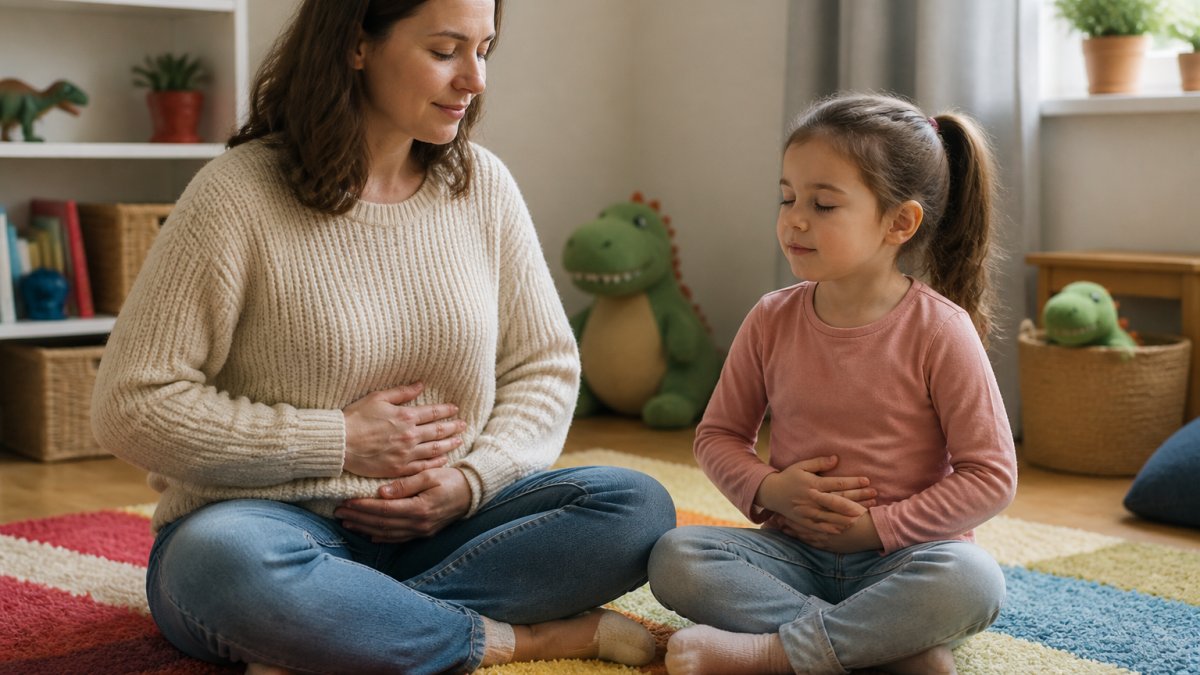
Belly Breathing
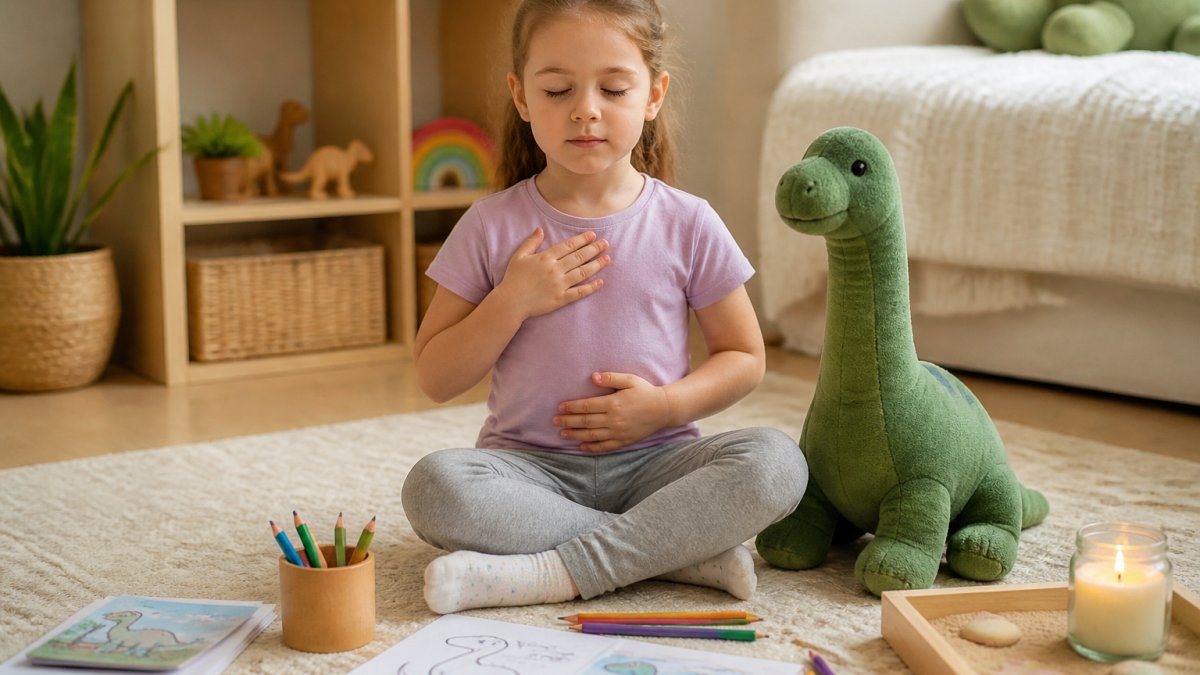
Belly breathing, or diaphragmatic breathing, teaches children to breathe deeply into their abdomen rather than shallow chest breathing. Ask your child to lie down and place a hand on their belly. As they breathe in, their belly should rise; as they breathe out, it should fall. This breathing exercise for children makes the breath visible and tangible.
Many anxious children naturally breathe shallowly, which keeps their nervous system activated. Belly breathing reverses this pattern. Even three to five minutes of belly breathing can noticeably shift a child's state.
Grounding Exercises for Children: Anchor Them in the Present
Anxiety often pulls children into worry about the future. Grounding exercises for children bring attention back to the present moment through the senses. When a child is anchored in what they can see, hear, feel, taste, or touch right now, anxious thoughts lose their grip.
Grounding exercises for children are particularly useful during moments of acute worry or when a child feels overwhelmed. They're also preventative, practising them regularly builds a child's ability to self-regulate.
The Five Senses Technique
The five senses technique is a powerful grounding exercise for children. Ask your child to notice:
- Five things they can see (colours, shapes, textures)
- Four things they can touch (the texture of their clothing, the floor beneath them, the air on their skin)
- Three things they can hear (distant sounds, nearby sounds, their own breathing)
- Two things they can smell (or imagine smelling)
- One thing they can taste (or imagine tasting)
This grounding exercise for children works because it shifts attention from internal worry to external sensory experience. The structured sequence also gives anxious children a clear framework to follow. Practise this when calm so your child knows the steps, then use it when anxiety arises.
Mindful Walking or Listening Walks
A mindful walking exercise for children can be as simple as a slow walk around the garden or house. Ask your child to notice the feeling of their feet touching the ground, the movement of their legs, the air on their skin. Alternatively, take a listening walk where the focus is purely on sounds, birds, wind, traffic, leaves.
These grounding exercises for children turn ordinary movement into a calming practice. They're especially useful for children who struggle to sit still, as they combine physical activity with mindfulness.
Calming Exercises for Kids You Can Do Anywhere
Some of the best calming exercises for kids are portable and require no setup. These work during transitions, in waiting rooms, or whenever a child's anxiety begins to rise.
Colour Focus and Mindful Observation
Ask your child to choose a colour, say, blue. Then, spend two to three minutes looking for every blue object in the room: a cushion, a picture, a toy, the sky outside. This calming exercise for kids anchors attention in the present and turns observation into a gentle game.
Alternatively, choose an object, a plant, a picture, a toy, and spend a minute studying it closely. What textures do they notice? What colours? What details have they never seen before? This mindful observation naturally quiets anxious thoughts.
Progressive Muscle Relaxation
Progressive muscle relaxation teaches children to notice and release physical tension. Guide your child through tensing and releasing different muscle groups: make fists and squeeze, then release; scrunch up their face, then relax; tighten their legs, then let go.
This calming exercise for kids is particularly useful because anxiety often manifests as physical tension. By consciously releasing that tension, children interrupt the anxiety cycle. A full progressive muscle relaxation takes five to ten minutes; shorter versions work too.
Mindful Tasting and Eating
Turn snack time into a mindfulness practice. Give your child a small, interesting food, a piece of fruit, a biscuit, a piece of chocolate. Ask them to notice its colour, smell, texture, and taste before eating. As they eat, encourage them to notice flavours, textures, and how the food changes in their mouth.
This calming exercise for kids engages the senses fully and naturally slows eating. It's a practical way to build mindfulness into daily routines.
Bedtime Relaxation for Kids: Wind Down Before Sleep
Many anxious children struggle with sleep. Bedtime relaxation practices signal to the nervous system that it's time to transition toward rest. These exercises work best as part of a consistent wind-down routine.
Guided Storytelling and Visualisation
Create a simple guided story your child can visualise. For example: "Imagine you're walking through a forest. The trees are tall and green. The ground is soft beneath your feet. You feel calm and safe. Ahead, you see a clearing with soft grass. You lie down on the grass and look up at the stars..."
Keep the story slow, gentle, and predictable. Bedtime relaxation for kids works best when the narrative is soothing rather than exciting. Repeat the same story several nights in a row so your child can anticipate and settle into it.
Body Scan Meditation
A body scan is a bedtime relaxation practice where you guide your child's attention through their body. Start at the top of their head and slowly move down: "Notice your forehead. Is it relaxed? Notice your eyes, your nose, your mouth..." Continue down through the shoulders, arms, chest, belly, legs, and feet.
This bedtime relaxation for kids naturally deepens breathing and draws attention inward. Many children fall asleep during or shortly after a body scan.
Making Mindfulness Stick: Tips for Success
Introducing mindfulness activities for anxious 6 year olds requires patience and consistency. Here's what tends to work:
Start small. A two-minute breathing exercise is more sustainable than a ten-minute routine. Build from there as your child becomes comfortable.
Practise when calm. Don't introduce a new technique only when your child is already anxious.
Make it playful. Use imaginative language and avoid clinical framing. "Breathing like a dragon" is more engaging than "diaphragmatic breathing."
Be consistent. Practise the same activity at the same time each day, perhaps after breakfast or before bed. Routine builds familiarity and trust.
Notice small shifts. Mindfulness doesn't always produce dramatic changes. Watch for subtle signs: slightly calmer breathing, a moment of quiet focus, or willingness to try the exercise again.
Adapt as needed. If balloon breathing doesn't resonate, try box breathing. If sitting feels impossible, try a walking meditation. Different techniques work for different children.
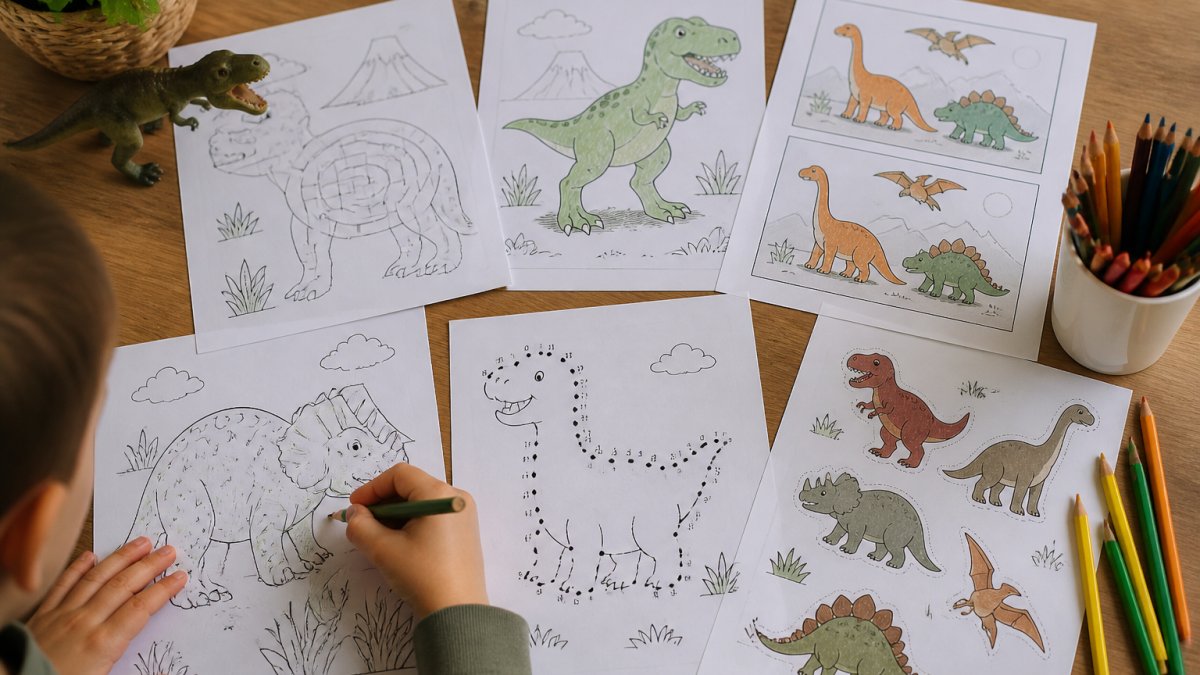
Many parents find that pairing mindfulness activities for anxious 6 year olds with engaging, visually interesting materials helps children stay motivated.
Conclusion
Anxiety in young children is real, but so is their capacity to learn self-regulation. Mindfulness activities for anxious 6 year olds, breathing exercises, grounding techniques, and calming practices, give children practical tools to manage worry and build emotional resilience. The activities work best when introduced playfully, practised consistently, and tailored to your child's preferences.
Roarora's mindfulness activity collections combine these evidence-based techniques with engaging dinosaur-themed content that captures children's imagination. Our printable packs guide parents through breathing exercises, grounding practices, and bedtime relaxation routines, making it easy to build a calm-down toolkit at home.
Frequently Asked Questions
What mindfulness activities are most suitable for an anxious 6-year-old?
Simple, movement-based activities work best for six-year-olds. Breathing exercises like balloon breathing and box breathing help calm the nervous system, whilst grounding techniques such as the five senses method bring focus to the present moment. Combine these with activities your child enjoys, colouring, storytelling or listening walks, to keep engagement high. School-based mindfulness practices show promising potential for improving adolescents' mental health and wellbeing, and similar approaches adapted for younger children can be equally effective when practised regularly at home.
How long should a mindfulness activity last for a 6-year-old?
Start with just two to three minutes and gradually build up to five or ten minutes as your child becomes more comfortable. Younger children have shorter attention spans, so brief, focused sessions work better than lengthy ones. It's better to do a short activity your child enjoys and asks to repeat than a longer one that feels like a chore. Consistency matters more than duration, even two minutes daily will have more benefit than a single twenty-minute session.
Can breathing exercises really help children with anxiety?
Yes. Breathing exercises work by activating the parasympathetic nervous system, which naturally calms the body's stress response. When a child feels anxious, their breathing often becomes shallow and rapid, which makes anxiety worse. Practising intentional breathing, like belly breathing or box breathing, teaches the body to relax. You can practise these techniques together during calm moments so your child knows how to use them when worry strikes.
How can I make mindfulness fun rather than feel like another task?
Frame mindfulness as a game or adventure rather than a lesson. Use imaginative language: 'Let's pretend we're blowing up a giant balloon with our breath' or 'Let's go on a listening walk to spot all the sounds in the garden.' Pair activities with things your child already loves, if they enjoy colouring, try mindful colouring where you focus on the colours and textures. Keep it playful, celebrate small wins and let your child choose which activity to try next.