 blog
Printable Dinosaur Storybooks for Toddlers: A Parent's Guide
Table of Contents
- Why Printable Dinosaur Storybooks Work for Toddlers
- Dinosaur Emergent Reader Printables: Building Early Literacy Skills
- Printable Dinosaur Activities for Toddlers Beyond Reading
- Quiet Time Activities for Toddlers: How Dinosaur Stories Support Calm Moments
- Dinosaur Books for Toddlers: Age-Appropriate Selection Guide
- How to Make the Most of Printable Dinosaur Storybooks
- Frequently Asked Questions
Last Updated: 21 October 2026
Why Printable Dinosaur Storybooks Work for Toddlers
Printable dinosaur storybooks for toddlers solve a real problem: keeping young children engaged without screens. The right printed story captures imagination in ways that feel both calming and educational.
Toddlers learn through repetition and play. When a story features characters they love, like dinosaurs, they're more likely to revisit it, ask questions, and build connections to the narrative. Printed books also create natural boundaries around screen time, which many parents find valuable during the day.
The magic of dinosaur stories lies in their combination of wonder and familiarity. Dinosaurs are extinct, which makes them mysterious. Yet they're also tangible, children can see them, touch the pages, and interact with the story at their own pace. This sensory experience strengthens early literacy skills and builds confidence with reading.
Dinosaur Emergent Reader Printables: Building Early Literacy Skills
Emergent reader printables bridge the gap between picture books and independent reading. These resources use simple vocabulary, repetitive patterns, and visual support to help children recognise words and build phonetic awareness.
Dinosaur-themed emergent readers engage children because the subject matter holds their attention. A story about Rory the T-Rex learning to roar might repeat the word "roar" throughout, helping children recognise and predict text. This repetition is intentional, it's how early readers develop sight word recognition.
The structure of emergent readers typically includes:
- Short sentences with predictable patterns
- Illustrations that support word meaning
- High-frequency words repeated across pages
- Clear, large typefaces for easy tracking
- A logical narrative arc that children can follow
When children interact with printable dinosaur storybooks as emergent readers, they're practising several literacy skills simultaneously: letter recognition, word decoding, comprehension, and prediction. Parents can support this process by reading aloud first, then encouraging children to read familiar sections independently.
Printable Dinosaur Activities for Toddlers Beyond Reading
Colouring and Creative Extensions
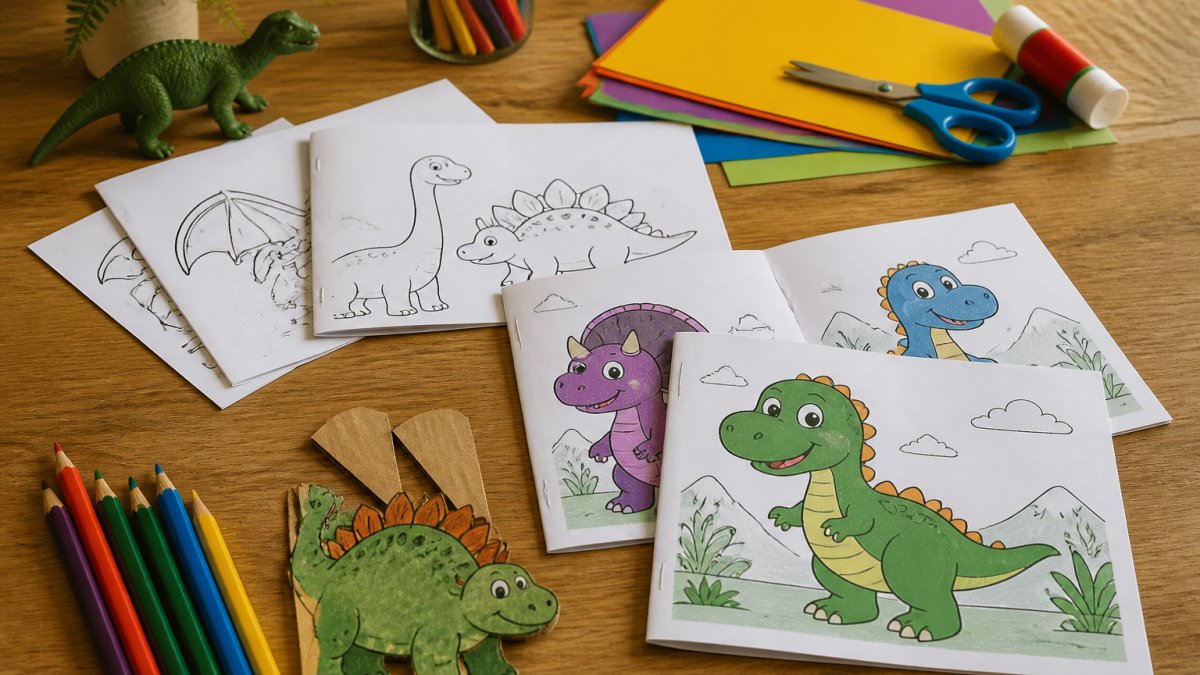
Colouring activities paired with dinosaur stories extend the engagement beyond the printed page. After reading about Stella the Stegosaurus, a child might colour a picture of her, reinforcing visual memory and fine motor control.
Creative extensions transform a simple story into a multi-sensory experience. Children can:
- Colour character illustrations from the story
- Create their own dinosaur designs inspired by the narrative
- Draw scenes they remember from the book
- Decorate dinosaur masks or puppets
These activities develop hand-eye coordination, colour recognition, and creative expression. They also give children time to process the story they've just heard or read, moving from passive listening to active creation.
Colouring packs pair naturally with storybooks, allowing parents to extend a single story session into a longer, richer activity block. This is particularly valuable during rainy days or when children need sustained quiet time.
Mindfulness and Calm-Down Activities
Dinosaur-themed mindfulness activities help toddlers develop emotional regulation skills. A breathing exercise framed as "breathing like a sleeping dinosaur" becomes both playful and functional.
Calm-down activities might include:
- Slow colouring with soft music playing
- Guided breathing exercises tied to dinosaur characters
- Progressive muscle relaxation framed as "waking up a dinosaur"
- Quiet reflection time with a printed story and cushions
These activities teach children to recognise their emotions and use concrete strategies to self-regulate. When paired with dinosaur characters they know and enjoy, the activities feel less like instruction and more like play.
Quiet Time Activities for Toddlers: How Dinosaur Stories Support Calm Moments
Quiet time is essential for toddler development. These moments allow children to rest, process experiences, and build independent play skills. Dinosaur storybooks create a natural anchor for quiet time because they're engaging enough to hold attention but calming enough to maintain a peaceful atmosphere.
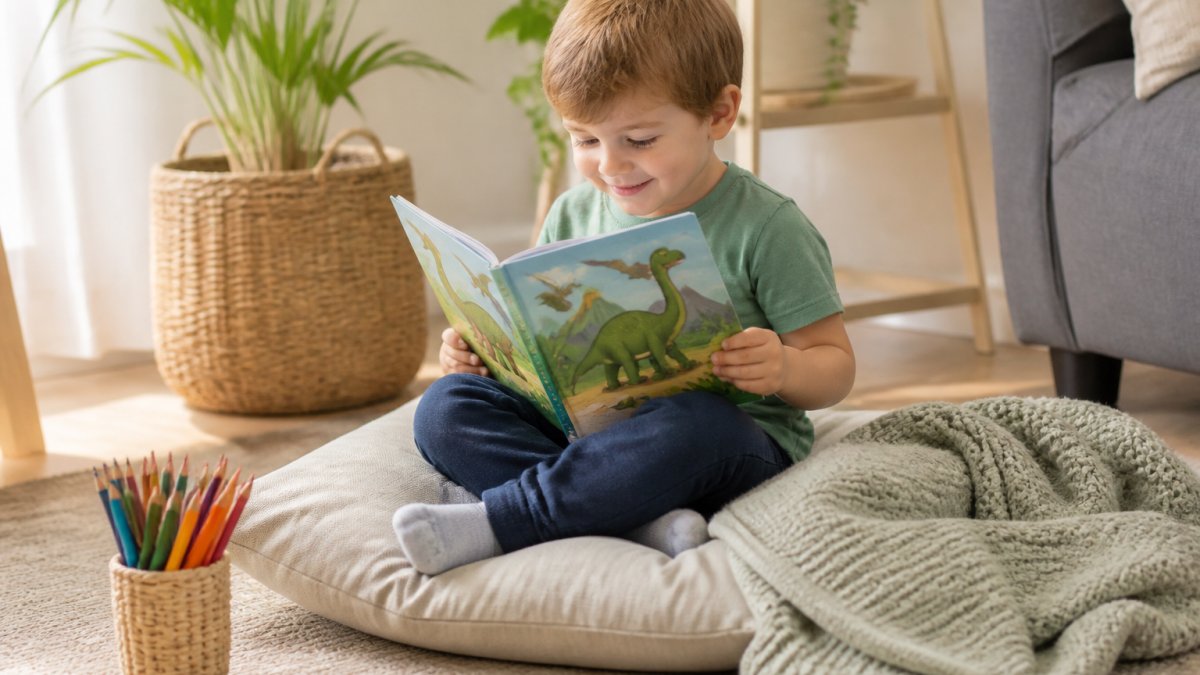
Printable dinosaur storybooks work particularly well for quiet time because they're predictable and re-readable. Unlike screen-based activities that demand constant novelty, a printed book can be revisited daily without losing its appeal. This consistency helps children wind down.
The ritual of quiet time matters as much as the activity itself. When children know that after lunch comes dinosaur story time on the reading cushion, they begin to associate that time block with calm and rest. Over weeks, this routine becomes a powerful signal to their bodies that it's time to settle.
Parents often ask whether these activities truly support calm. The answer depends on consistency and environment. A dinosaur storybook read in a quiet corner with soft lighting creates very different conditions than the same book read during a chaotic morning. Setting matters.
Dinosaur Books for Toddlers: Age-Appropriate Selection Guide
Not all dinosaur storybooks suit every age group. Selecting age-appropriate content ensures children stay engaged without frustration.
Ages 3-4: First Dinosaur Adventures
Toddlers aged 3-4 are just beginning to follow simple narratives. The best printable dinosaur storybooks for this age group feature:
- Very short texts (under 100 words per page)
- Bright, bold illustrations that dominate the page
- Simple repeated phrases children can anticipate
- Dinosaurs with expressive faces and friendly characteristics
- Minimal plot complexity, a single action or emotion per story
Stories about dinosaurs learning to do everyday things (eating, sleeping, playing) resonate with this age group because they mirror the child's own experiences. A story about Benny the Brachiosaurus learning to share feels relevant to a 3-year-old navigating social play.
Ages 5-6: Growing Confidence and Longer Stories
Children aged 5-6 can follow more complex narratives and enjoy slightly longer texts. Printable dinosaur storybooks for this age might include:
- Stories with 150-300 words spread across 8-12 pages
- Dinosaur characters with distinct personalities and challenges
- Simple plot structures with a beginning, middle, and end
- Opportunities for prediction ("What do you think will happen next?")
- Themes of friendship, courage, or problem-solving
At this age, children often enjoy stories where dinosaur characters face small challenges and work through them. Ada the Ankylosaurus finding her way back to her herd, or Tilly the Triceratops making a new friend, gives children characters to root for and lessons to absorb.
Ages 7-8: Independence and Emerging Reader Content
Older toddlers and early primary-school children benefit from printable dinosaur storybooks that support emerging independence. These might feature:
- Longer narratives (500+ words across 15-20 pages)
- More sophisticated vocabulary with context clues
- Dinosaur characters with complex emotions and motivations
- Opportunities for children to read independently or with minimal support
- Themes that explore friendship dynamics, persistence, or discovery
At this stage, children often enjoy series featuring the same dinosaur characters. Knowing characters from previous stories creates continuity and investment in their adventures.
How to Make the Most of Printable Dinosaur Storybooks
Storage and Access Tips
The way you store printable dinosaur storybooks affects how often children use them. Books that are visible and accessible get read more frequently than those hidden in a drawer.
Effective storage strategies include:
- A low basket or bin within a child's reach, clearly labelled with dinosaur imagery
- A small bookshelf at child height where spines or covers are visible
- A reading corner with a cushion and a dedicated shelf or basket nearby
- Laminated covers that withstand repeated handling and sticky fingers
- Page protectors for frequently-read stories
When children can independently choose a dinosaur storybook and settle into a reading space, they're building agency and self-directed learning habits. This independence is as valuable as the reading practice itself.
Creating a Routine Around Storytime
Routines signal to children what to expect and help them transition between activities. A consistent dinosaur storytime routine might look like:
Before story time: Gather in the reading corner. Choose one or two books. Get comfortable with a cushion or blanket.
During story time: Read aloud, pointing to pictures. Pause to ask questions. Encourage children to predict what happens next.
After story time: Discuss the story briefly. Offer a colouring activity or quiet play related to the story.
This structure takes 15-20 minutes and can be repeated daily. Children who experience consistent, predictable storytime routines develop stronger literacy skills and more positive associations with reading.
Printable dinosaur storybooks work well within this routine because they're designed for repeated reading. The same story can anchor multiple days of quiet time without losing its appeal.
Printable dinosaur storybooks for toddlers offer more than entertainment, they create space for calm, connection, and early literacy development. Whether your child is just beginning to recognise letters or confidently reading simple sentences, the right dinosaur story meets them where they are. Roarora's collection of printable storybooks, colouring packs, and mindfulness activities brings dinosaur adventures to life in ways that support imagination, creativity, and quiet moments at home. Explore our range and discover how these resources can transform your child's relationship with reading and calm time.
Frequently Asked Questions
Where can I find printable dinosaur storybooks for toddlers?
Printable dinosaur storybooks are available from specialist digital download retailers. Roarora offers original dinosaur storybooks featuring characters like Rory, Tilly, and Stella, designed specifically for toddlers aged 3-8. Once purchased, you download the files instantly and print them at home or through a local print shop. This gives you immediate access without waiting for delivery.
What makes a good dinosaur story for toddlers?
Effective dinosaur stories for toddlers use simple language, repetitive phrases, and relatable emotions. They feature friendly dinosaur characters rather than scary ones, include bright illustrations, and keep plots short and easy to follow. Stories that combine adventure with calming moments work best for young children, especially those used during quiet time or before bed.
How can I use dinosaur stories for quiet time?
Designate a specific time each day for dinosaur storytime in a comfortable, distraction-free space. Create a routine: gather cushions, settle your child, and read together without interruptions. Pair the story with a colouring activity afterwards to extend the calm period. This consistent structure helps toddlers anticipate quiet time and wind down, making it an effective part of their daily rhythm.
Are printable dinosaur books suitable for two-year-olds?
Most printable dinosaur storybooks are designed for ages 3 and up, though some two-year-olds enjoy looking at the pictures with adult support. Look for books with very simple text, sturdy paper (print on thicker stock), and large, clear illustrations. For the youngest toddlers, focus on books with minimal words and bright dinosaur images rather than complex stories.